
The Flaw in the Foundation: The Importance of Clean Patent Ownership Chains
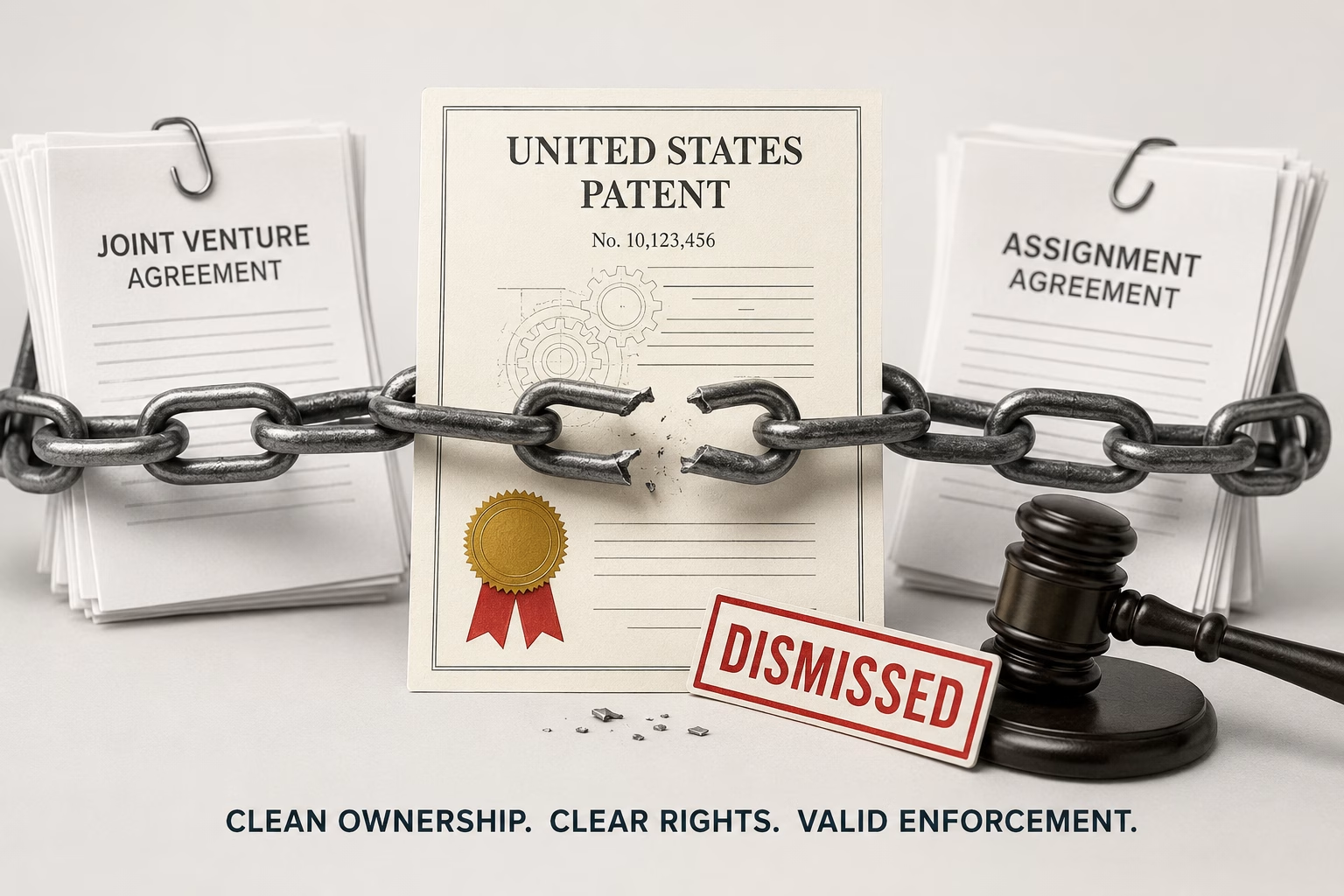
A decade-long patent infringement dispute between Applications in Internet Time, LLC and Salesforce, Inc. recently ended in a total dismissal, delivering a critical warning about the dangers of fragmented intellectual property ownership. The Federal Circuit affirmed that a flawed ownership chain completely invalidates a company's right to enforce patents. The dispositive issue in the case arose from a complex history of agreements surrounding a joint venture. The Federal Circuit found that the patent rights had transferred to a party other than the plaintiff under California state law due to the agreements and thus the plaintiff had no exclusionary rights to assert and lacked standing to bring a case.
This litigation underscores that a plaintiff possessing legal title to a patent before filing a lawsuit is a strict constitutional requirement. In this case, the Federal Circuit found that the plaintiff did not own the patents at issue and the assignment of the patents to the plaintiff was not valid even though it was recorded with the U.S. Patent and Trademark Office. The court also rejected the idea that the ownership defects could be fixed in the litigation after the fact. Retroactive agreements, corrective assignments, and post-filing contract repairs are legally insufficient to cure an initial lack of standing, meaning years of expensive litigation can be completely wiped out due to a historical oversight.
This case is demonstrative that even though patent rights are federal in nature, state contract principles can still affect enforcement if patent ownership is not properly assigned. This is why the attorneys at Taylor & Edelstein look for possible patent ownership issues as part of any litigation activity.