
Location-Based Sharing Patents Crumble: Key Takeaway from Q Tech v. Walmart
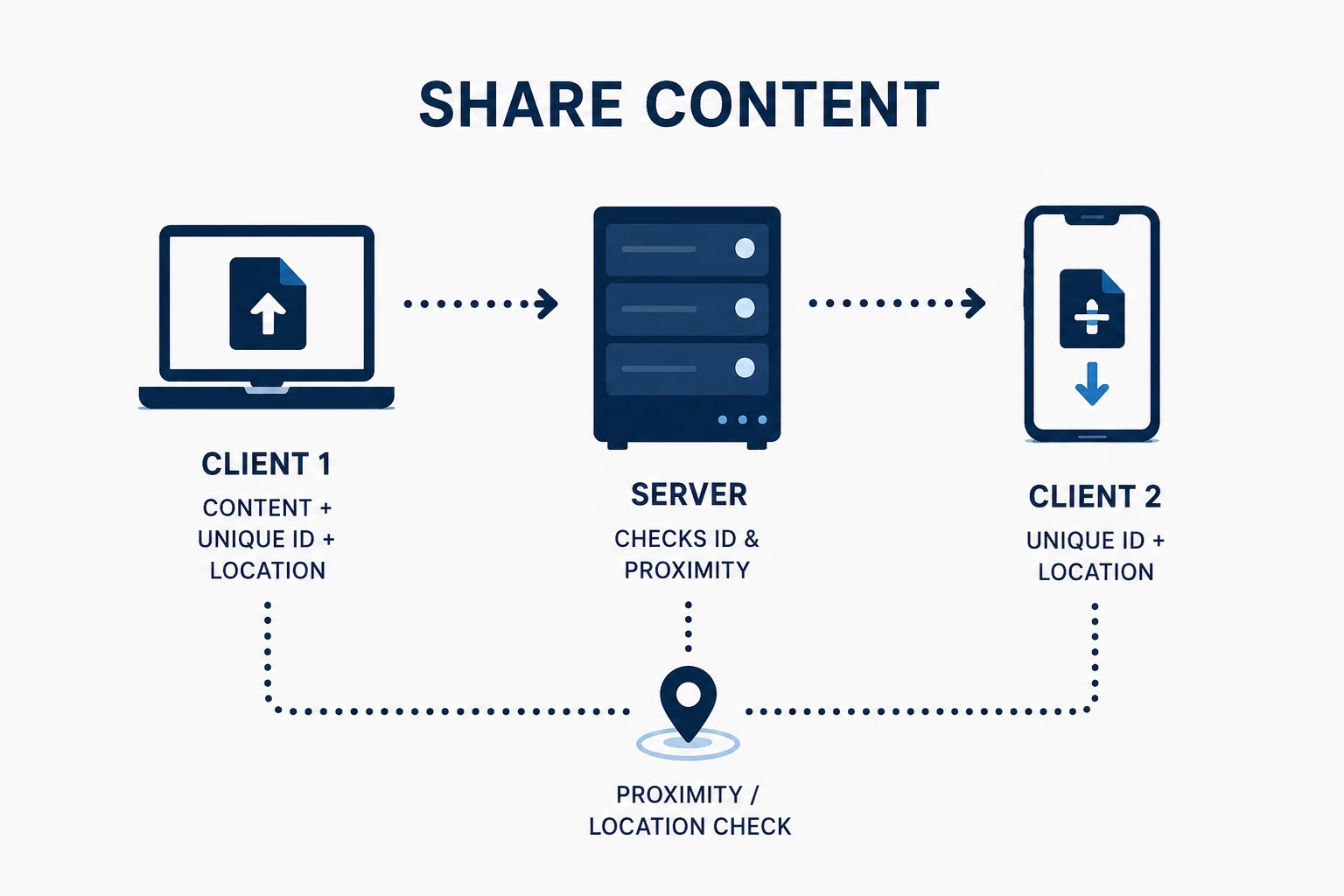
In a decision issued February 5, 2026, the Federal Circuit upheld the invalidity of Q Technologies’ patents covering methods for sharing content via uniquely generated identifiers. The asserted claims of U.S. Patents 9,635,108, 10,567,473, and 10,594,774 described a system where a first client sends content along with a unique identifier and its location to a server. A second client could then access that content by providing the identifier and its own location, with the server checking proximity or identifier matches before delivering the shared material.
The court applied the Alice two-step framework and agreed with the district court that the claims were directed to the abstract idea of sharing content using a unique identifier. The court found that adding location and proximity checks merely limited the circumstances of sharing but did not transform the claims into a patent-eligible technological improvement to computer networks or file-sharing systems. At step two, the Federal Circuit found no inventive concept, as the elements involved only conventional components like servers and clients performing routine functions. Even arguments about a “hybrid architecture” or novel use of location data failed to create a genuine issue of material fact sufficient to avoid summary judgment of ineligibility.
This case demonstrates the continued scrutiny applied to computer-implemented inventions and the criticality of drafting thoughtful claims covering such inventions to withstand invalidity challenges.